
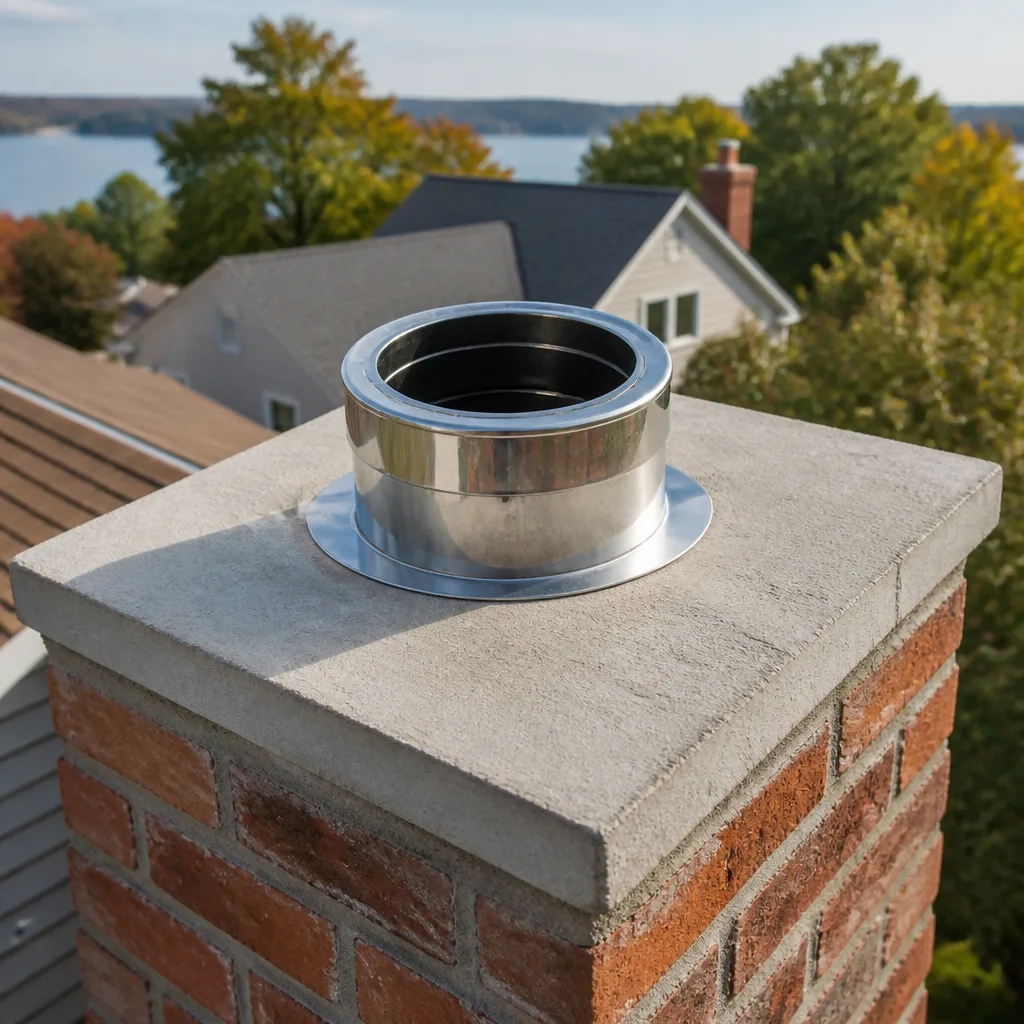
 Flue relining
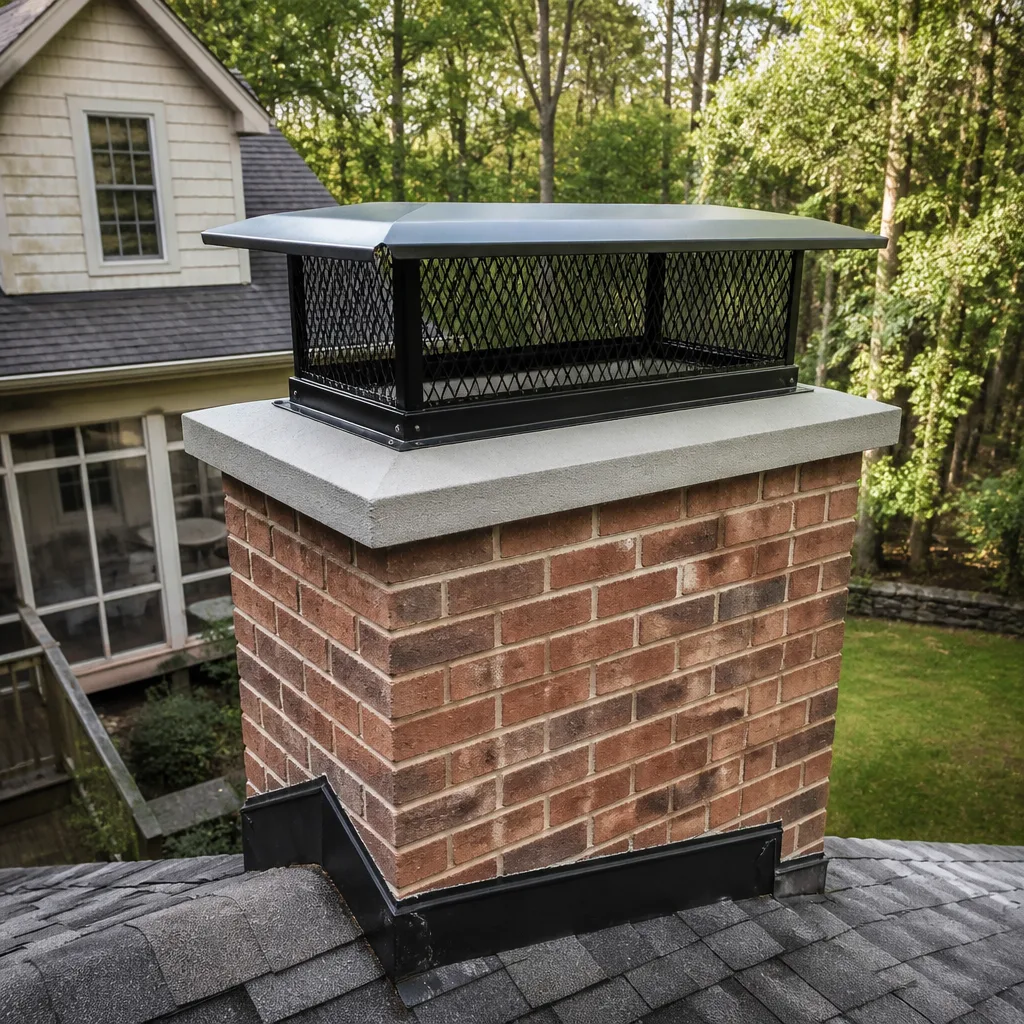 Sweep & inspection
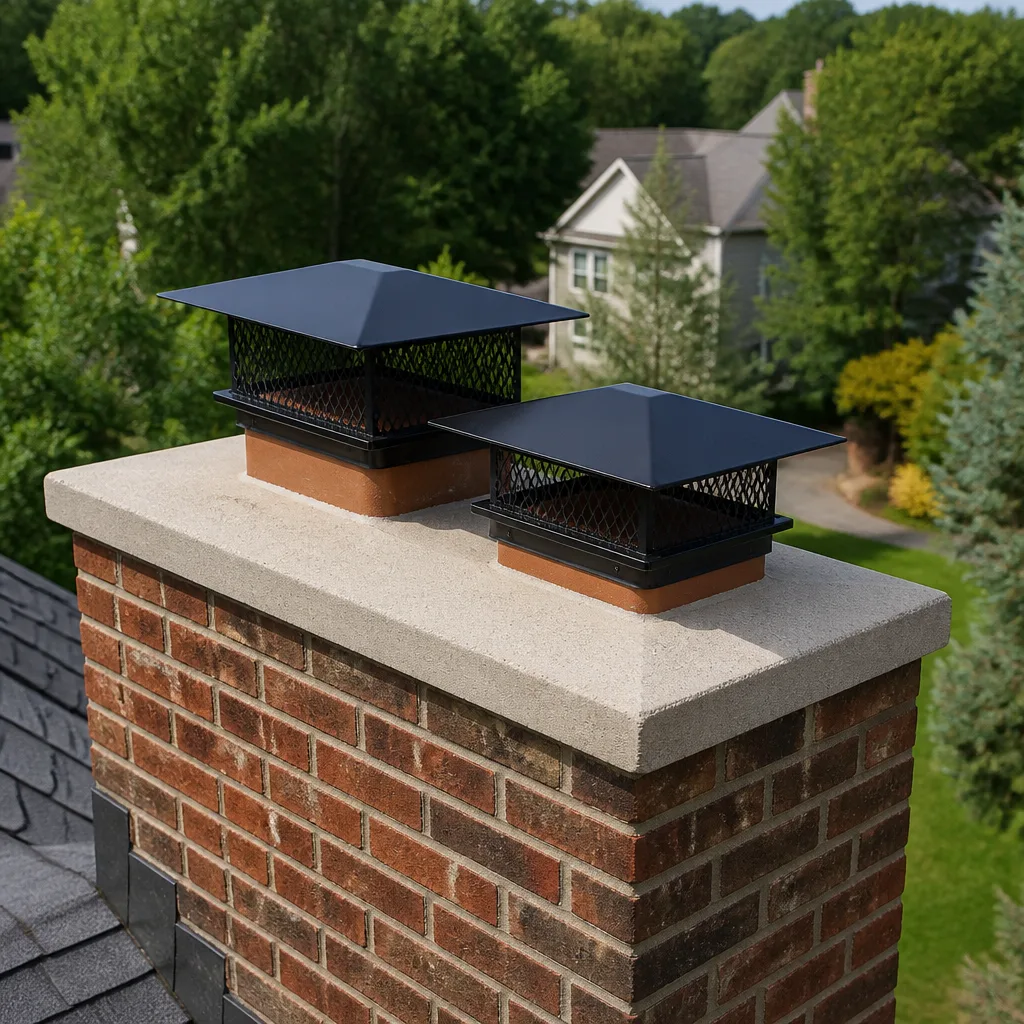 Caps & crowns
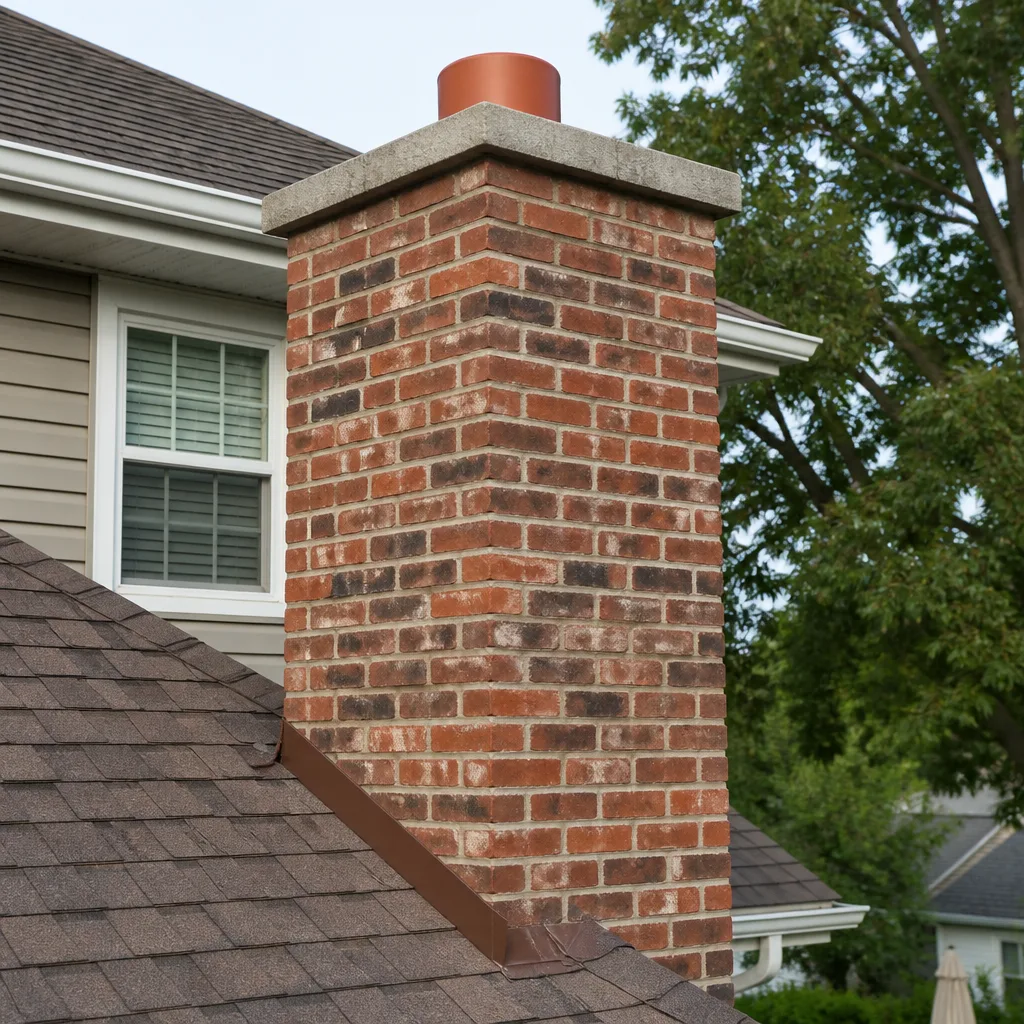 Masonry repair
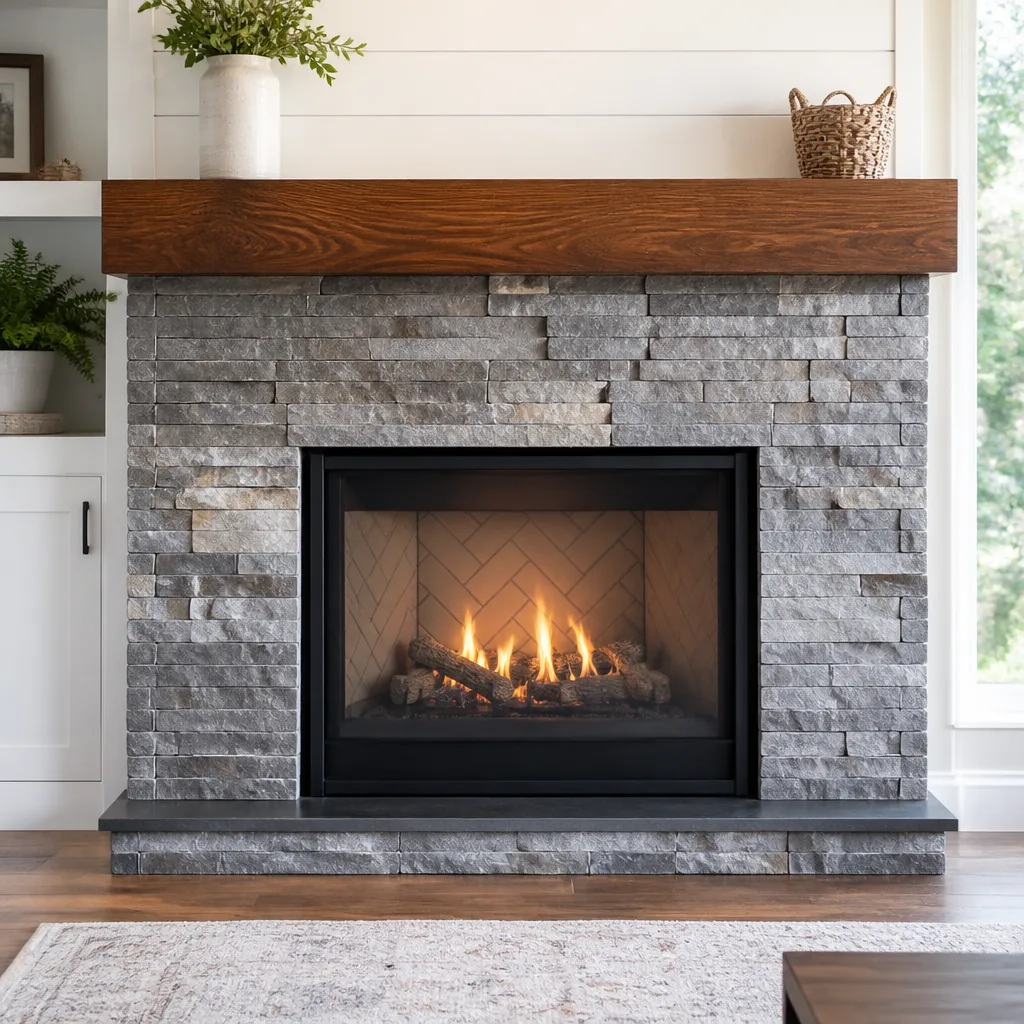 Gas fireplace service
Level 1 sweep and inspection to the NFPA 211 annual standard - flue, crown, cap, and flashing checked and photographed
Chimney sweep logs do not sweep chimneys. They loosen some creosote - which then falls where a brush and vacuum still have to collect it.
Olympia Chimney Flue Liner Replacement: The San Francisco Owner’s Guide
If your Olympia Chimney flue liner has cracked, corroded, or separated, replacement typically runs $1,800 to $4,200 installed in San Francisco, depending on the liner length, chimney height, and whether we’re pulling a damaged clay tile liner or relining a prefab chase. We stock Olympia Chimney-compatible stainless steel flex liners on our trucks for common Bay Area chimney configurations, and most single-story liner replacements are finished in one visit. The way owners usually find out is subtle at first: a light dusting of soot around the firebox, a faint campfire smell upstairs, or water staining on the ceiling near the chimney chase. By the time the liner fails visibly, combustion gases have been moving through spaces they were never meant to touch.
Which Olympia Chimney Models This Applies To
Olympia Chimney manufactures flue liners and venting components for both masonry chimneys and factory-built fireplaces, and the compatibility question depends on what your home actually has. If you have a masonry chimney, the relevant part is usually an Olympia stainless steel flex liner that drops down the existing clay tile flue, typically in 5.5-inch, 6-inch, or 7-inch diameters to match the appliance collar. If you have a factory-built fireplace, Olympia Chimney’s air-cooled and insulated liner kits use a proprietary locking system, and that’s where we see the most mismatched parts: a homeowner buys a generic liner online, gets it onto the roof, and discovers the collar won’t seat against the original Olympia termination cap. The label on the existing pipe or the rating plate inside the firebox door frame will tell us what we need. We always verify the inside diameter with a caliper before quoting, because two fireplaces that look identical from the outside can call for different liner gauges once you factor in San Francisco’s coastal moisture and the appliance’s BTU output.
On the OEM versus aftermarket question: Olympia Chimney’s own liners are well-built, and when the existing system is an Olympia factory-built fireplace, we prefer OEM for the termination and connector components because the tolerances matter for the draft. For masonry chimneys, a quality 316L stainless flex liner from a brand we trust, such as DuraFlex or Gelco, works just as well, often at a lower material cost, and we carry those too. What we won’t do is install a thin-walled aluminum liner in a wood-burning application. It’s against code in most Bay Area jurisdictions, and it won’t survive San Francisco’s salt air the way proper stainless will.
Styles & brands we work with
Signs Your Olympia Chimney Flue Liner Replacement Is Failing
- Soot stains appearing around the firebox or on the mantel. This means combustion byproducts are leaking through gaps in the liner instead of venting up and out. The liner has cracked or separated at a seam, and the pressure differential in the chimney is pushing smoke back into the room.
- A campfire or barbecue smell in rooms far from the fireplace, even when nothing is burning. This is creosote odor, and it’s lingering in spaces the liner used to seal off. In San Francisco’s older Victorians and Edwardians, we find this smell travels through wall cavities and floor joists before anyone spots visible damage.
- Flakes of shiny material or rust-colored debris in the firebox after a rain. Water is getting into the chimney and degrading the liner or the clay tiles around it. The flakes are a telltale sign of corrosion or spalling, and in fog-belt neighborhoods like the Sunset or Richmond, the moisture load makes this worse year over year.
- Visible cracks or gaps in the clay tile liner when you shine a light up from the firebox or down from the roof. A cracked flue tile can’t contain heat and gases the way a continuous stainless liner can. This is the single most common reason Ruben Castellano recommends a liner replacement rather than a patch job on older San Francisco masonry chimneys.
- The damper won’t fully open or close, or the fireplace drafts poorly on windy days. A warped or corroded liner can obstruct the flue path, and a liner that’s shifted at a joint will disrupt the draft. Draft issues that come and go with the weather are rarely the firewood; they’re usually the flue itself.
See the difference
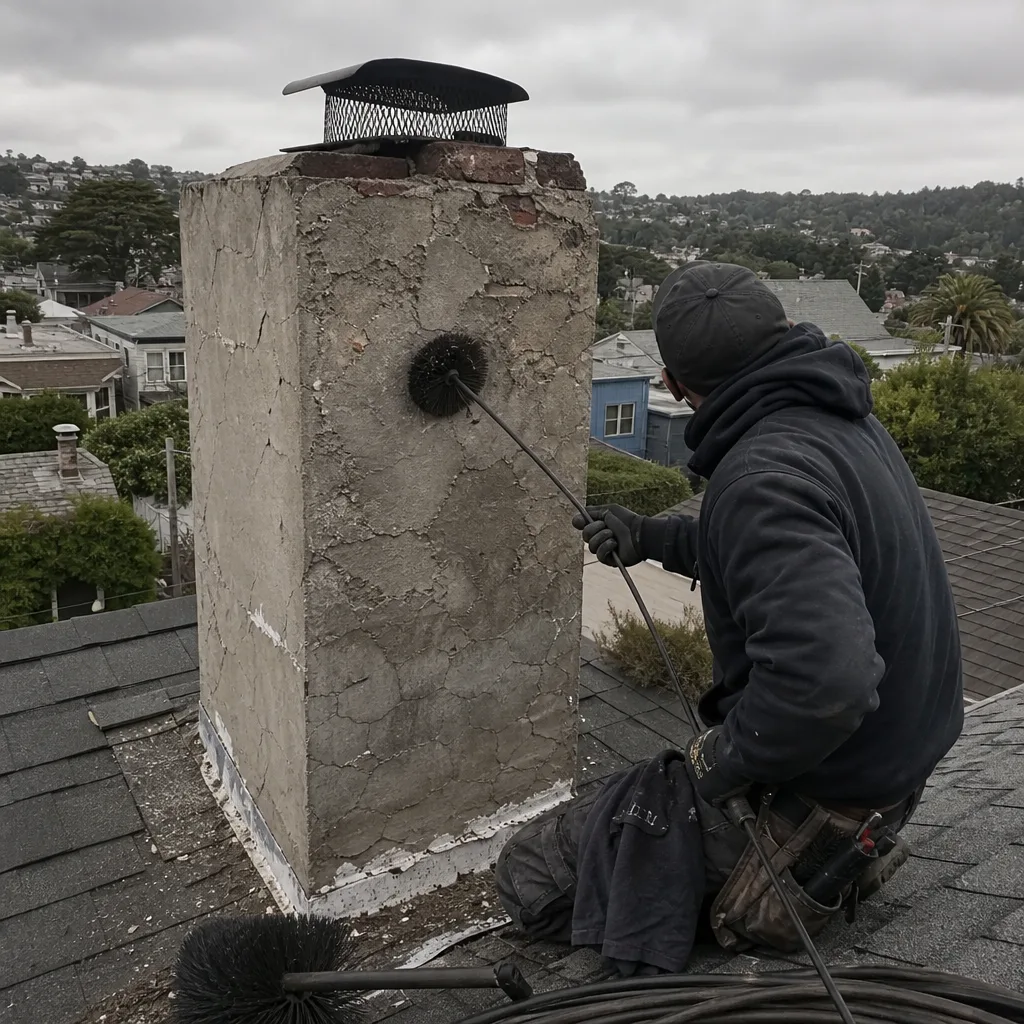 Before
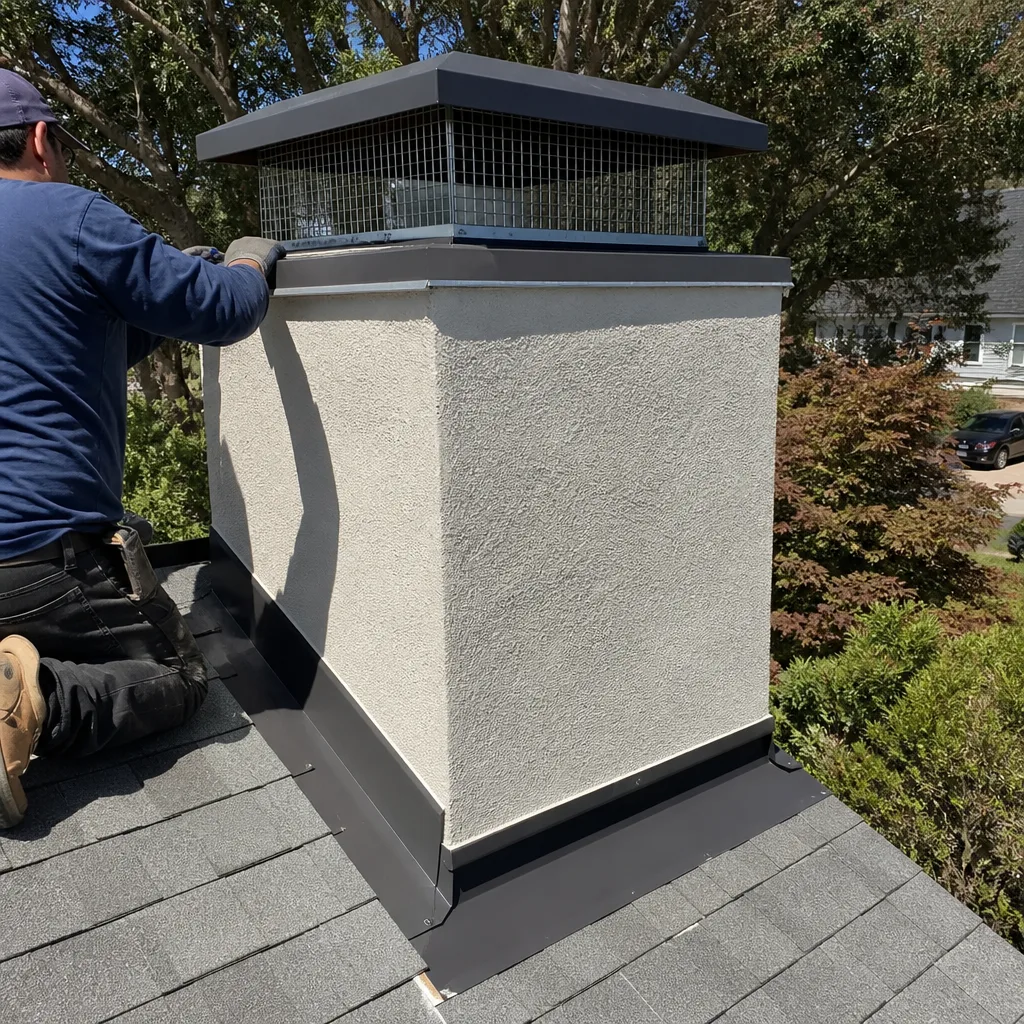 After
After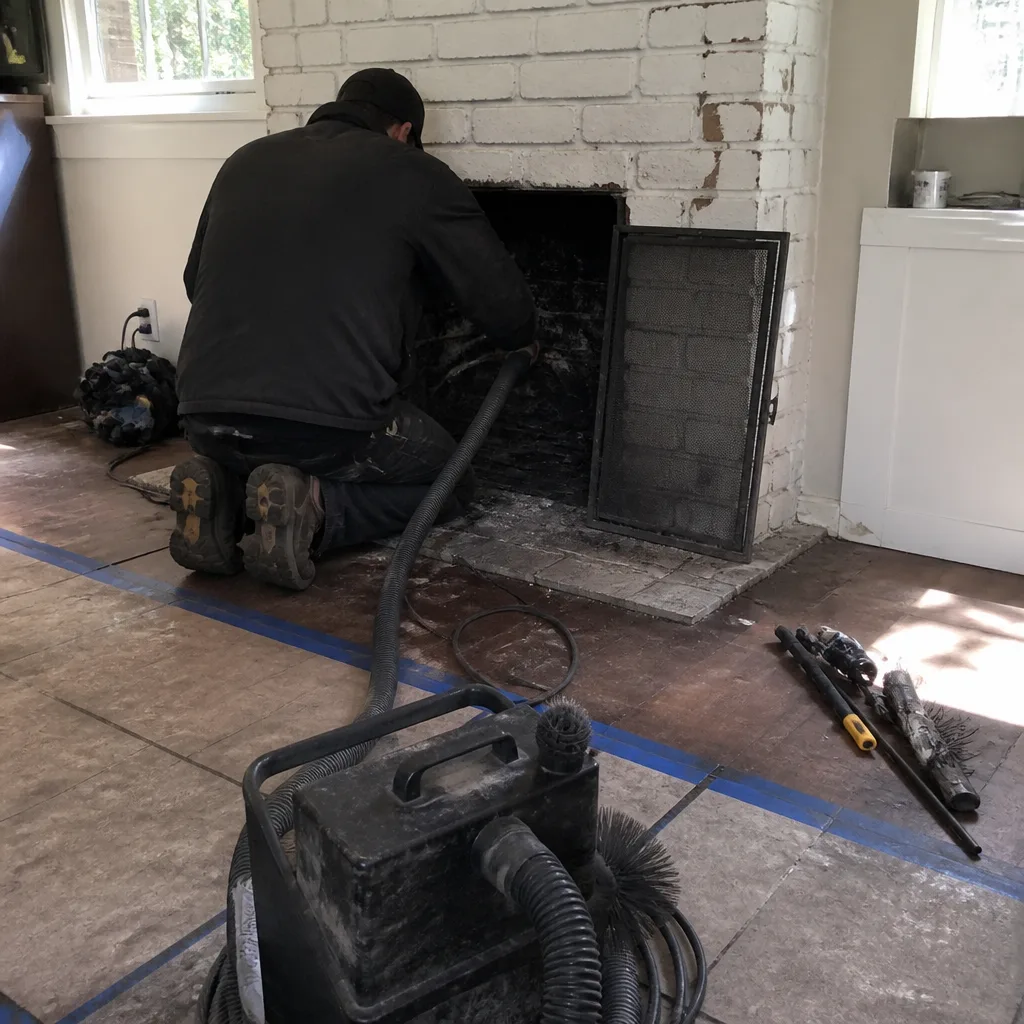 Before
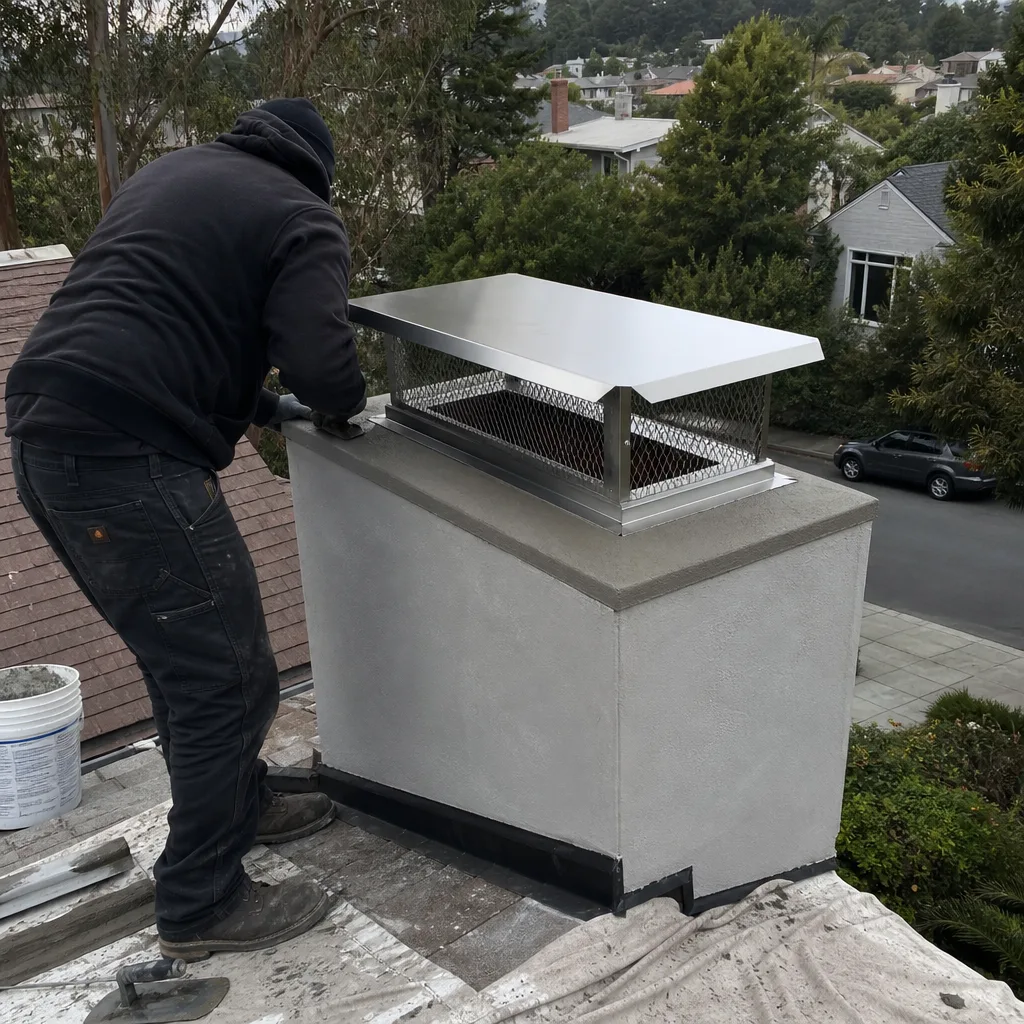 After
After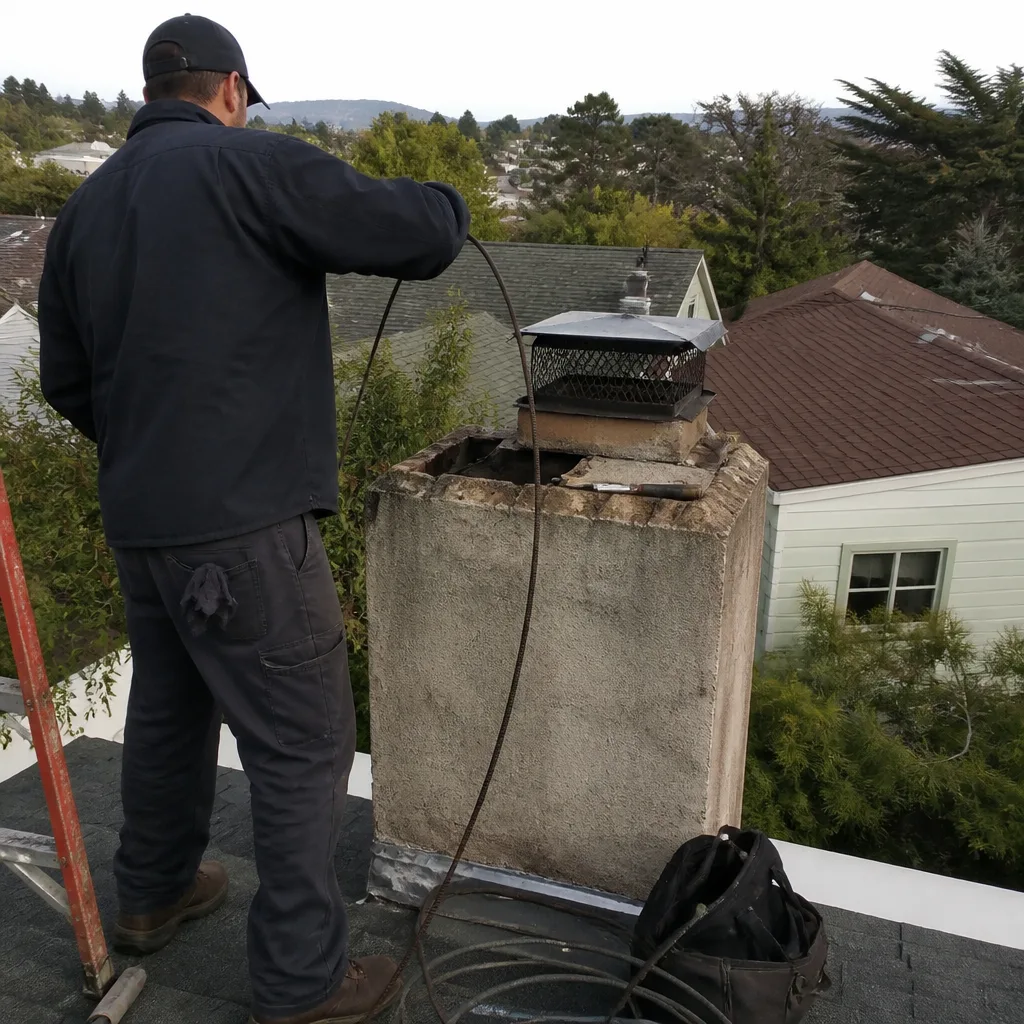 Before
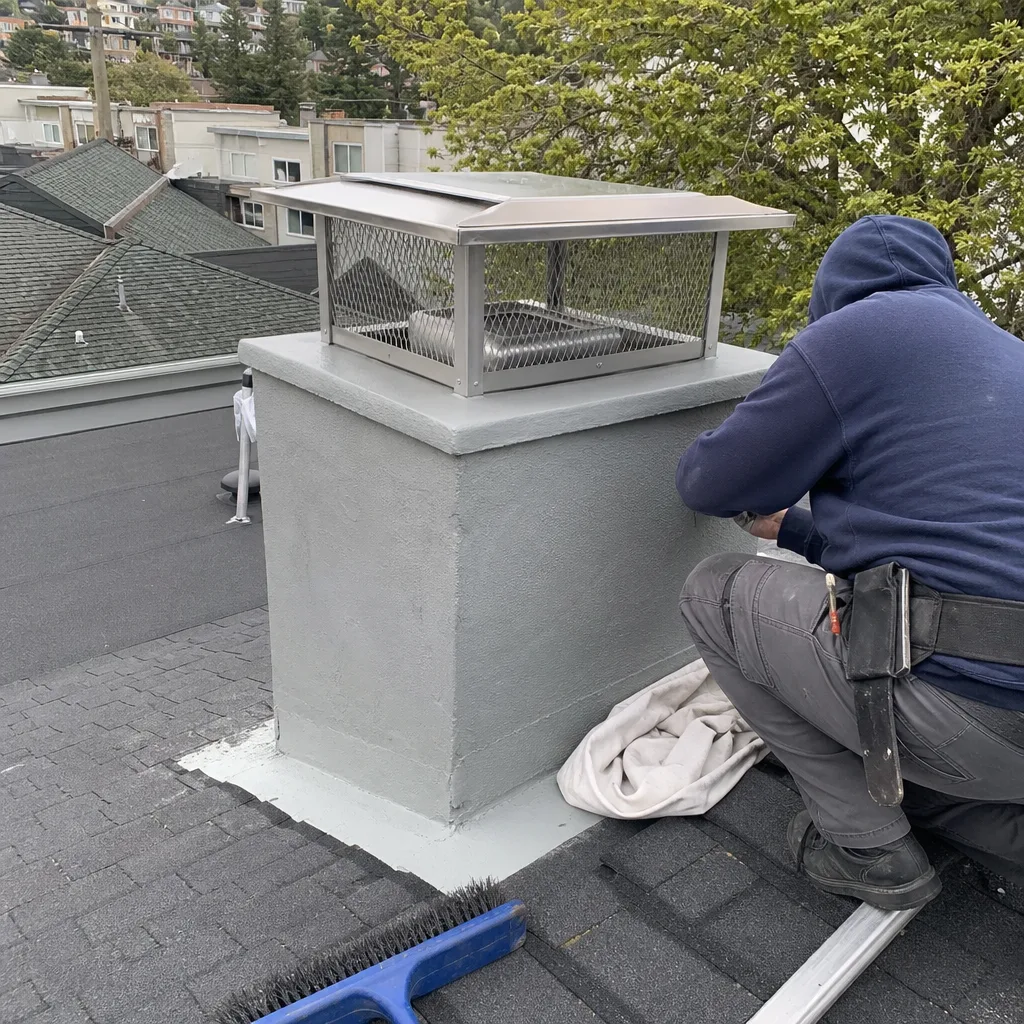 After
AfterReplacement Cost & What’s Included
A full Olympia Chimney-compatible flue liner replacement in San Francisco typically runs $1,800 to $4,200 installed. The range is driven by three things: the liner length required, whether we’re removing a damaged clay tile liner first, and how much roof access work the job demands. A straightforward single-story masonry chimney with a 25-foot liner usually lands around $2,200 to $2,800. A two-story Victorian in the Mission or Noe Valley with a steep roof pitch, a deteriorated clay liner that needs breaking out, and a long chase can push toward the top of the range. We give you a written price before any work starts, and it includes the liner, the top plate and rain cap, the connector to the appliance, the labor, and our camera verification after the liner is seated. Every liner replacement carries our written guarantee: if it fails within the coverage period, the second visit and repair are free. That’s the 365-Day Done Right Promise, and it’s not an upsell.
DIY or Call Us?
What you can safely do is check what you can see: shine a flashlight up from the firebox and look for cracks, missing mortar joints between tiles, or rust staining. You can also check the attic around the chimney chase for water marks after a storm. What you should not do is attempt the liner removal or installation yourself. This is not a spray-foam or patch situation. A flue liner replacement involves working at height on a San Francisco roof, disconnecting the appliance venting, handling stainless flex pipe that can be sharp at the cut edges, and verifying the final installation with a camera so you know the liner is actually seated and sealed. Getting any of that wrong means combustion gases moving into your house instead of up the chimney. That’s a job for a trained professional with the right equipment and the right insurance. If you’re seeing any of the signs above, call Ruben Castellano’s crew at (831) 534-3789 and tell us what you’re seeing. We’ll tell you straight what it means.
FAQs
A properly installed 316L stainless liner in a San Francisco chimney typically lasts 20 to 30 years, but the original clay tile liner in homes built before 1980 often fails in half that time due to moisture and shifting. Coastal air accelerates corrosion on cheaper liners, which is why we specify stainless rather than aluminum for wood-burning applications. If your current liner is over 15 years old and you’re noticing odor or drafting problems, a camera inspection will tell us exactly where it stands. Call (831) 534-3789 for a free estimate, and we’ll give you a straight answer, not a scare tactic.
Small cracks in the clay tiles can sometimes be addressed with a resurfacing product like HeatShield, which we also install, but a physically separated or heavily corroded liner needs replacement. Patching a liner that’s already compromised usually buys you a season or two, not a solution, and the patch itself can become a draft obstruction. Ruben Castellano calls it the way he sees it: if the camera shows tile collapse or a liner seam that’s separated, replacement is the honest recommendation.
Most single-story liner replacements in San Francisco are completed in one visit, typically four to six hours from setup to final camera verification. Two-story chimneys, clay tile removal, or difficult roof access can stretch the job into a second day, and we’ll tell you that before we schedule anything. Weather matters too: we won’t do a roof tear-off in the rain, so fog days in the Outer Sunset sometimes push a job to the next clear morning.
We stock Olympia Chimney-compatible flex liner in the most common San Francisco sizes on our trucks, along with top plates, rain caps, and connectors from DuraFlex, Gelco, and other professional trade brands. For factory-built Olympia Chimney fireplaces that need OEM termination components, we often have those in stock as well, and if we don’t, our supplier relationship means we can usually have the part in hand within a few business days. Call us at (831) 534-3789 with your fireplace model number, and we’ll tell you what’s on the truck and what we need to order before we give you a price.
Written by Ruben Castellano, Owner, Alcott Chimney San Francisco at Alcott Chimney San Francisco, serving San Francisco and nearby areas.